Project Spotlight: Fremont Village Apartments

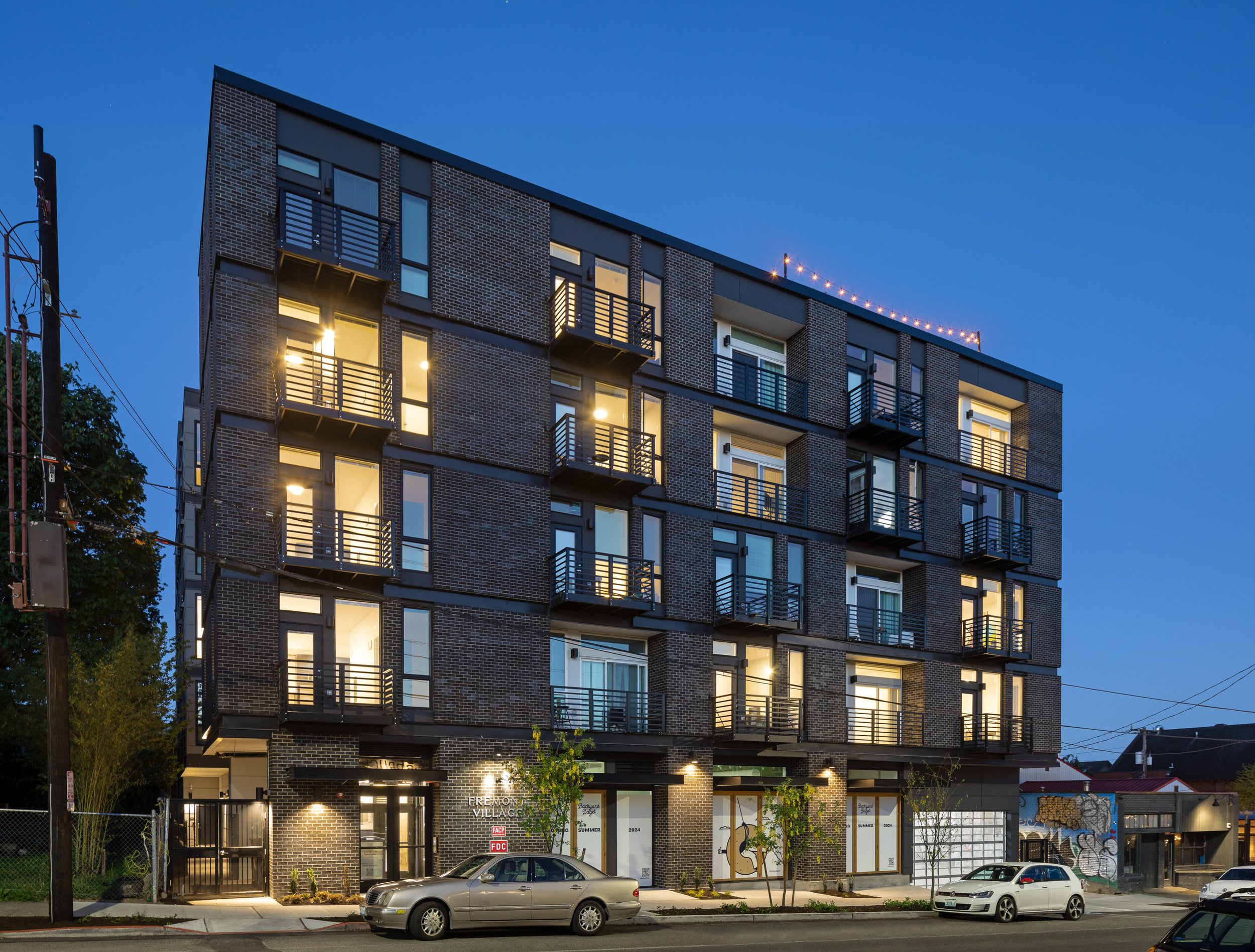
The Fremont Village street facing facade.
In one of Seattle’s most recognizable and eclectic neighborhoods, the Fremont Village Apartments explores how multifamily buildings can contribute meaningfully to the character of the city. Through material quality, spatial clarity, and thoughtful urban integration, buildings at this “in between” scale can meaningfully add to neighborhood character.
For b9 architects, it reflects a core design value: that innovative solutions create the opportunity to shape the broader experience of the street and add meaningful density across the city. With a strong collaborative process between the client and architect, focused on design excellence, the Fremont Village project contributes a thoughtful solution to Seattle’s housing crisis.
Early Vision and Long-Term Investment
The project began in early 2019, as a feasibility study for repeat client, Cohen Properties who also completed two other multifamily projects with b9 architects, Ship Street and the Ondine. Early involvement allowed the design team to determine fundamental project characteristics including design concept, site strategy, unit mix, and overall massing. That early alignment between architect and client proved critical. As the project evolved, it enabled collaboration and as a result, faster decision-making. The client and design team also had a shared commitment to design quality, that held even as external challenges arose through entitlement into construction.
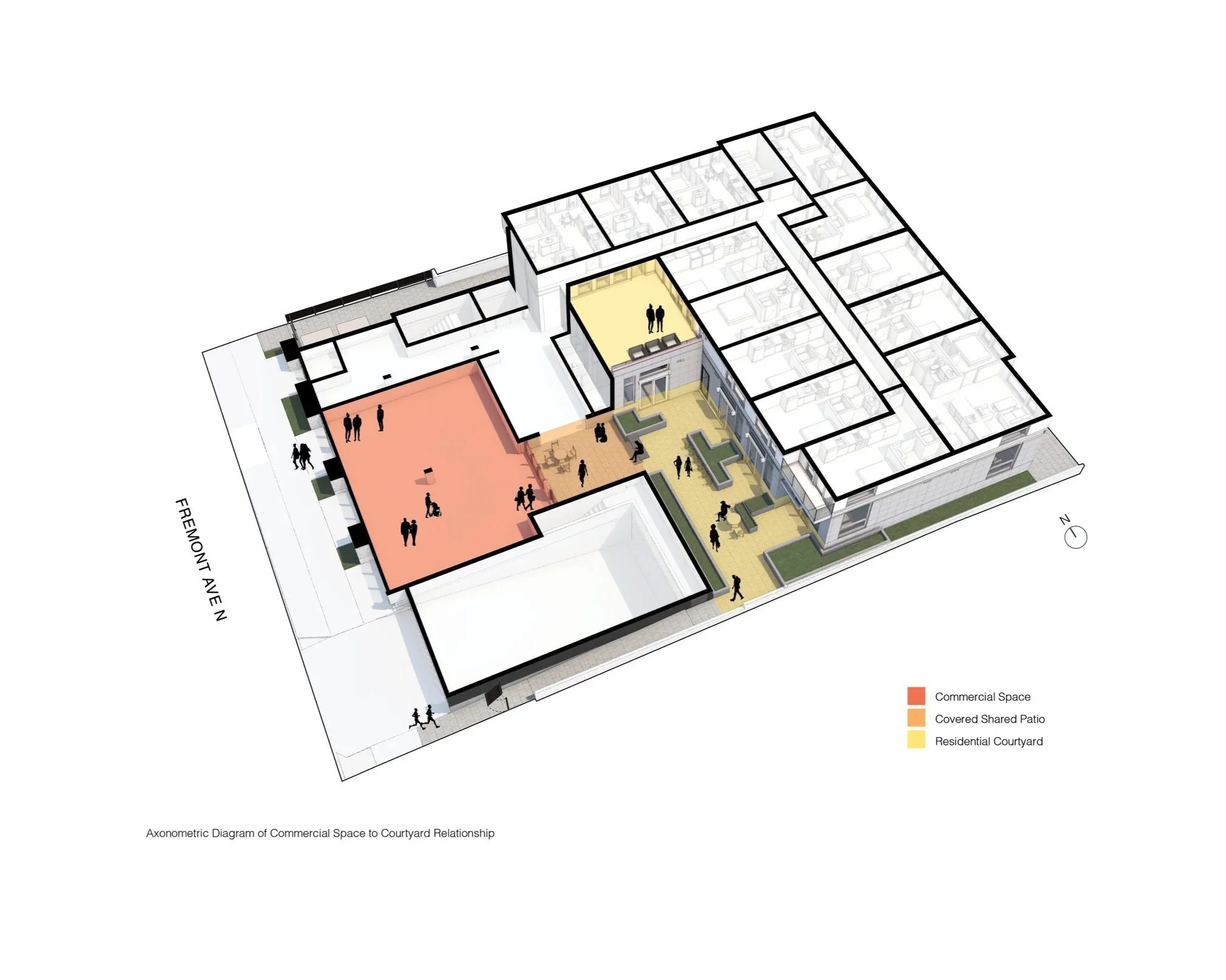
The relationship between the commercial space and resident courtyard.
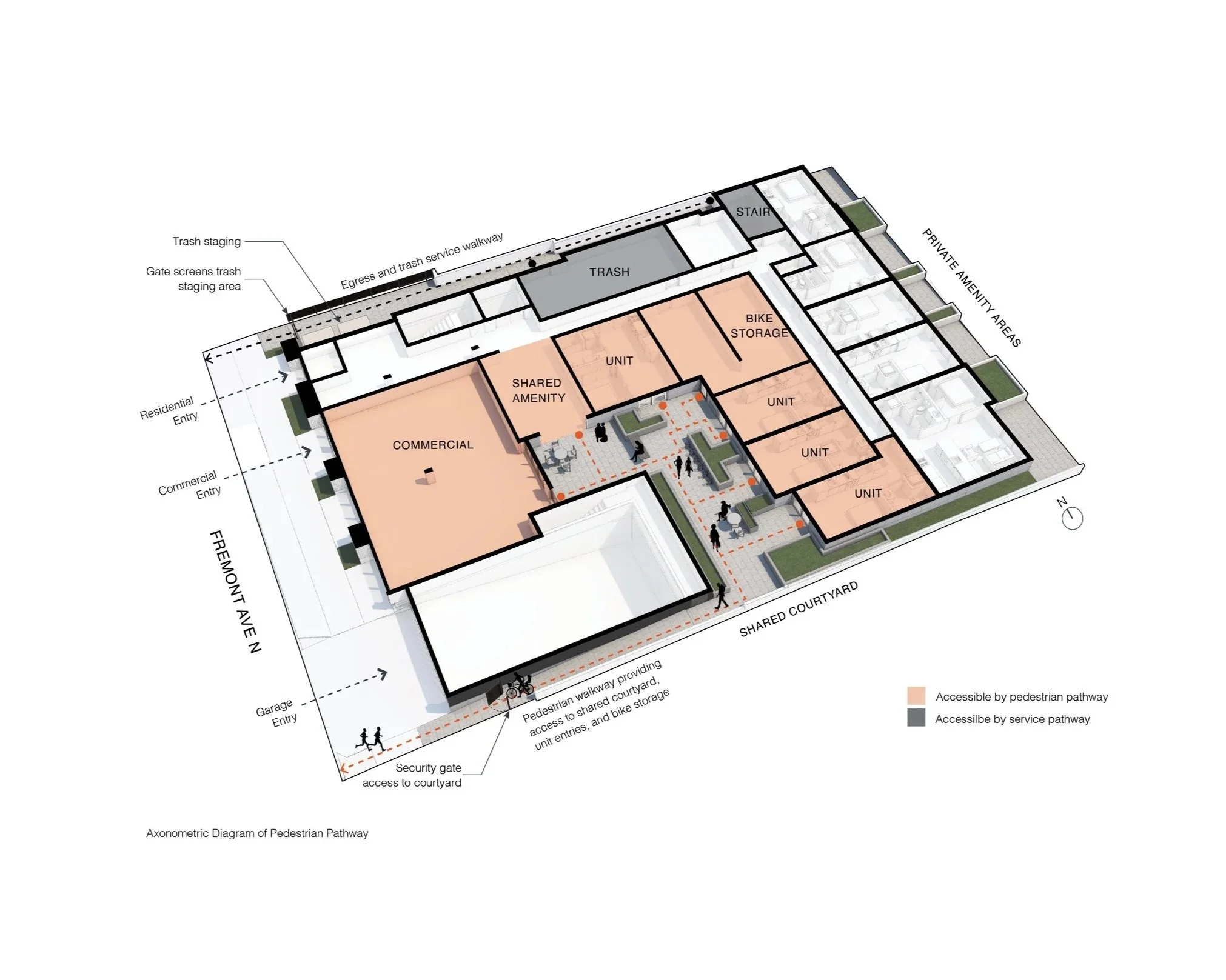
Pedestrian accessibility diagram.
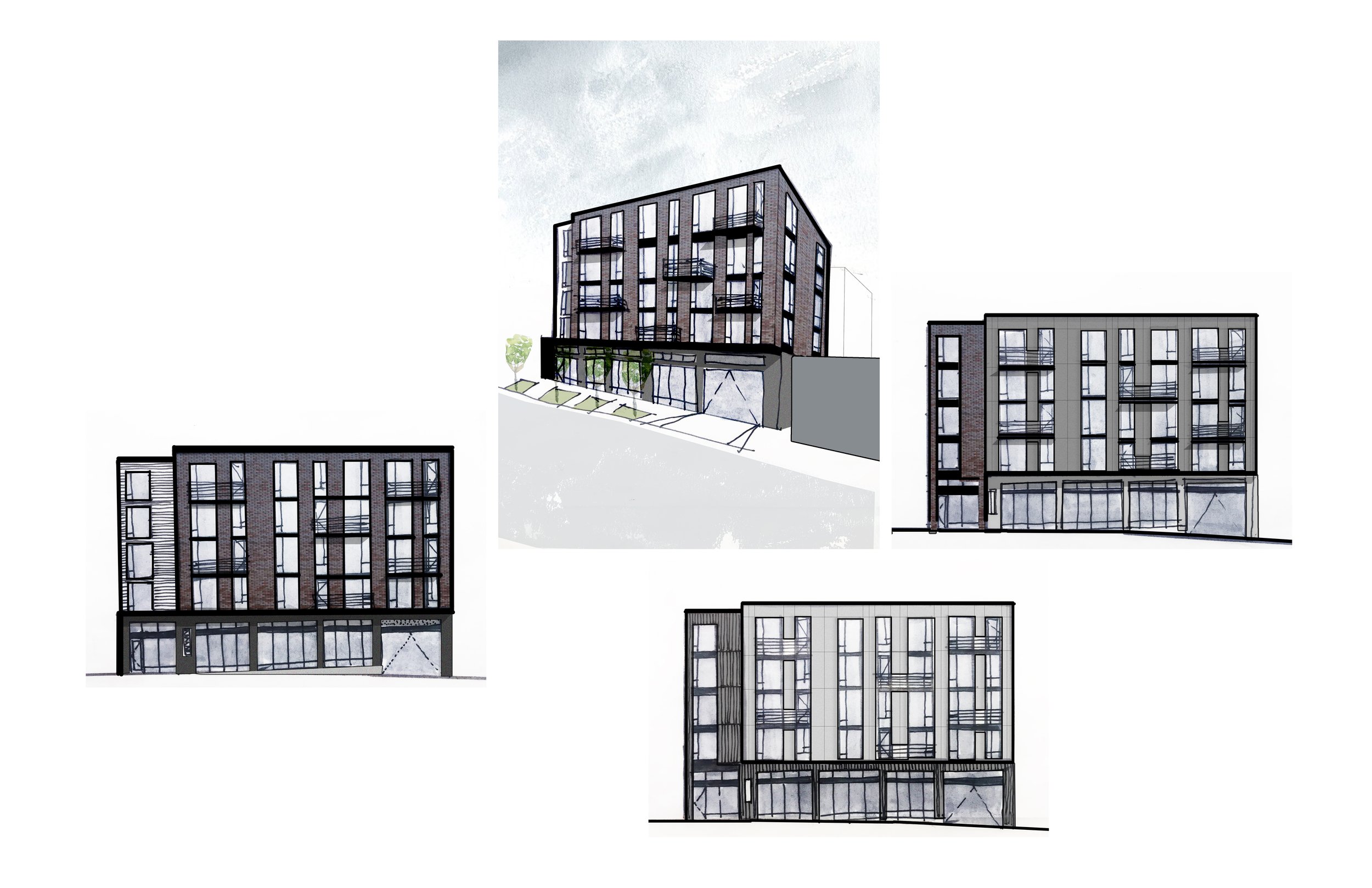
Initial design sketches for rhythm and materiality.
Building Through Complexity
Fremont Village Apartments moved into Design Development in 2020, at the height of the pandemic introducing significant uncertainty and management challenges. In response to “Stay at Home” guidelines from the State, the City of Seattle paused its Design Review process and then transitioned it from in-person meetings to an administrative format, limiting opportunities for dialogue about design intent.
Within the entitlement and design process for the project itself, complexity came from layering multiple systems into a constrained site. Parking requirements, even with reductions for transit access, had to be carefully coordinated with unit layouts and below-grade construction. Mechanical, electrical, plumbing, and accessibility requirements all competed for space and priority requiring a high level of coordination and integration. Systems were resolved directly within the construction documents, allowing the building to move forward with greater clarity despite its complexity.
A Study in Rhythm, Material, and Depth
Architecturally, the building is defined by a disciplined approach to façade composition. A consistent rhythm of large windows and balconies creates a clear pattern across the most public, street-facing elevation, while high-quality brick gives the building a sense of permanence while referencing Seattle’s architectural past. In a neighborhood with a mix of older commercial, and residential structures, the brick exterior grounds the project more naturally as an extension of the Fremont neighborhood’s fabric.
Recessed portions of the street-facing façade introduce variation and shadow. This modulation and articulation reflects the realities of Seattle’s Design Review process, where regulatory preferences shape architectural outcomes in spite of clear design intent.
While the exterior establishes a presence in the neighborhood, the project’s internal spaces define the residents’ experiences. A central courtyard offers a protected, shared environment for residents connected to ground floor units, a shared in-building amenity space, bicycle parking and ground-floor commercial spaces. The courtyard, separated from the street, increases privacy and decreases the impact of street noise. Above, two roof decks provide open views to the neighborhood and downtown beyond and a contrasting sense of exposure.
The courtyard also plays a key role in the project’s massing strategy. By introducing a controlled gap at the center of the building massing, the design improves light access and views for units while reducing the number of internal corners, an efficiency that benefits livability.
At street level, a vibrant commercial space connects through to the inner courtyard, replacing previously inactive uses, extending the energy of Fremont’s core and reinforcing the pedestrian experience.
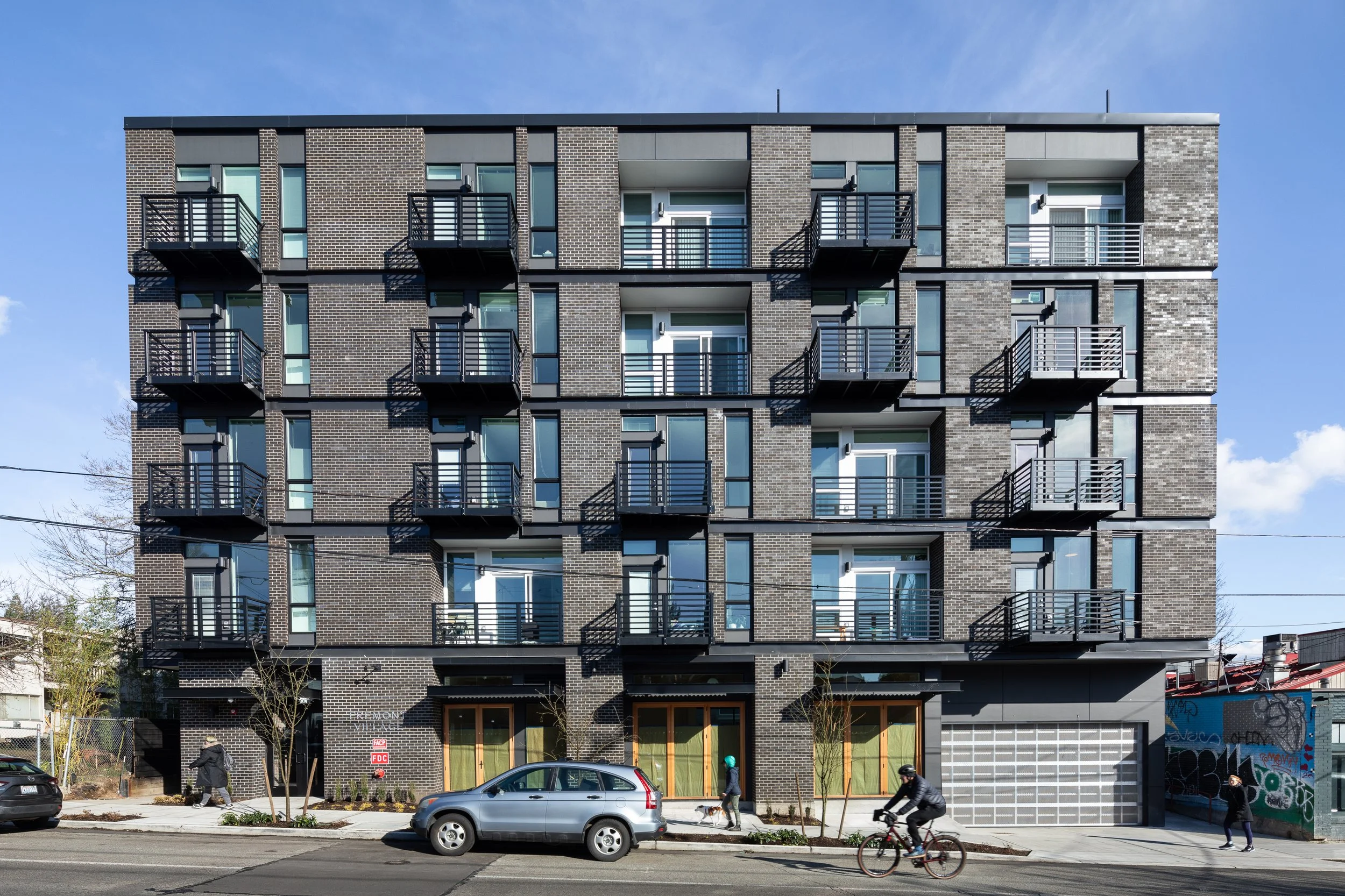
Fremont Avenue N is a highly trafficked pedestrian thoroughfare.

Internal courtyard for pedestrians.
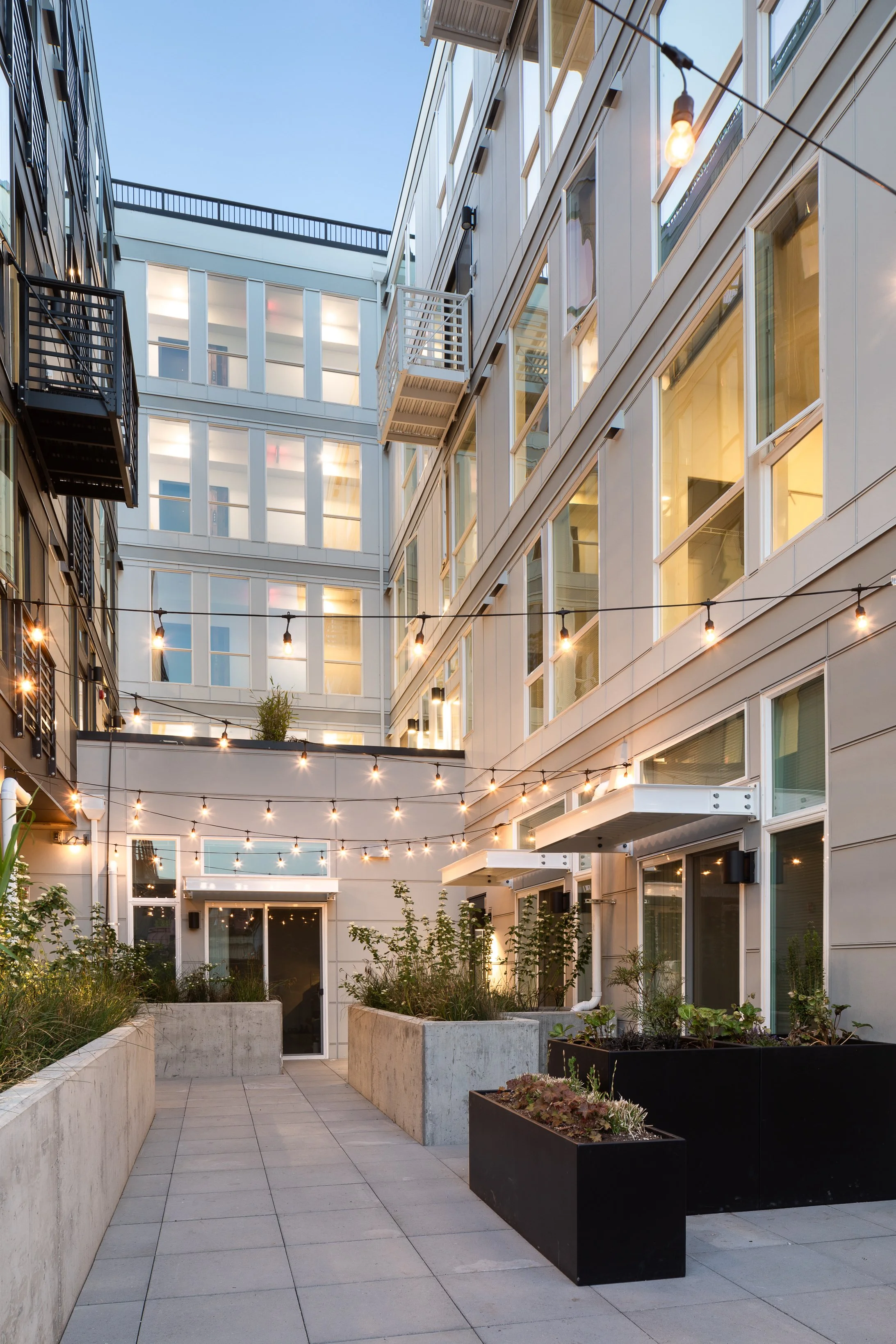
Courtyard at night.
Lessons in Process and Alignment
Like many urban multifamily projects, Fremont Village Apartments highlights the tension between design ambition and regulatory constraint. Competing code requirements including parking, accessibility, and building systems require thoughtful consideration, with late-stage changes having ripple effects across the entire project.
One key takeaway is the importance of a clear, well-defined program from the outset. When project goals are aligned early, between architect, client, and contractor, the team is better equipped to navigate complexity without compromising core design principles.
Projects in the scale of the Fremont Village Apartments, at roughly 80–120 units occupy a critical middle ground. Large enough to influence the character of a neighborhood, but still small enough for design decisions to remain intentional and legible. At this scale, elements like façade rhythm, material quality, and shared project spaces directly shape how a building is perceived and experienced.
Ultimately, the goal of Fremont Village Apartments is straightforward: creating housing that feels durable, livable, and connected to its context. It means investing in materials and spaces that will age well over time. And it means recognizing that even within the constraints of urban development, there is still room to make buildings that contribute positively to the city.